The Wright restaurant, Guggenheim, New York

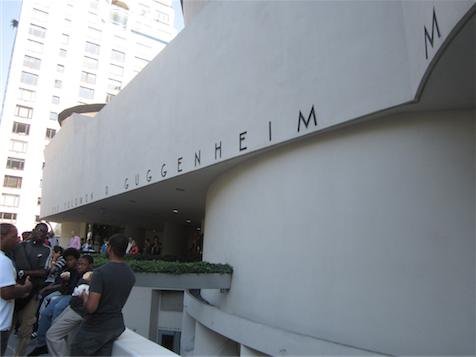
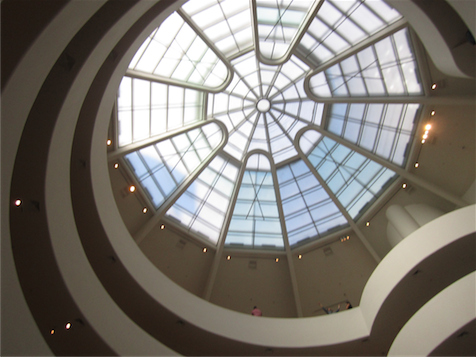
Whether you are interested in art or not, a trip to the magnificent Guggenheim is a must when staying in New York. When I first visited the Big Apple I was in awe of this epic building, and so I couldn’t wait to return.

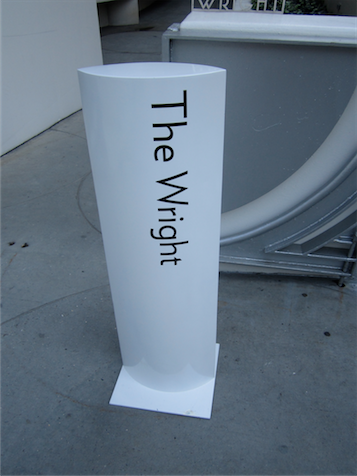
This time around I was lucky enough to discover the super stylish Wright restaurant at the Guggenheim. Serving up delicious food and sensational cocktails in a suitably artistic setting, it is the ideal place to dine pre or post exhibition viewing!

After a leisurely walk around Central Park in the sunshine, we collapsed into our seats at the Wright, nodding profusely when asked if we’d like a cocktail or not.

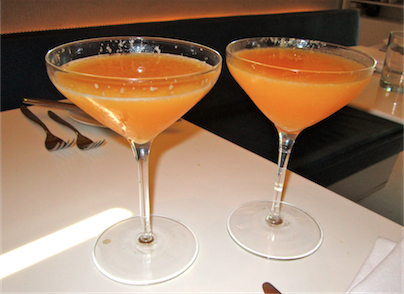
The food here is contemporary and confident, with an emphasis on fine ingredients and attractive presentation. With the chattering creatives surrounding us, we soon relaxed and felt completely at ease among all the ladies who lunch. I loved the atmosphere and could have spent the whole afternoon over our yummy lunch. Vibrant clementine orange martini glasses arrived, much to our delight, and we sipped on the cooling concoctions, the Wright (grey goose orange vodka, sweet vermouth, orange juice, Campari, club soda and orange twist) for me and the Park (Tanqueray Gin, Grand Marnier, Apricot Brandy, Orange Juice and Grenadine) for my chum. They looked almost identical mixed expertly to create smooth and flavoursome drinks.

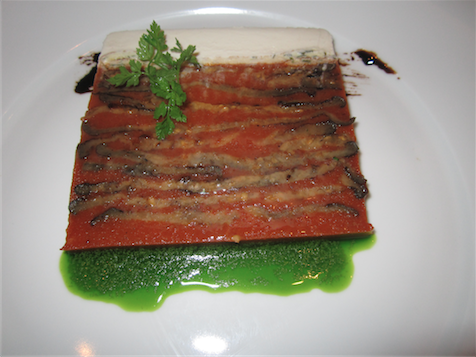
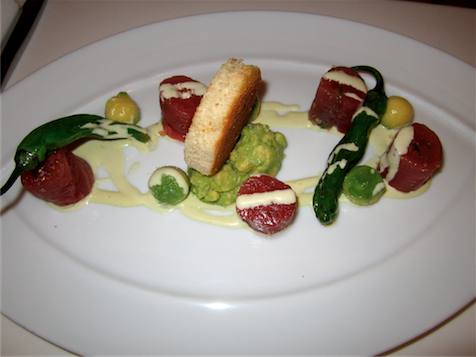
The menu is clear and simple with bold flavours and high quality ingredients. My friend seemed absolutely delighted with her Sashimi Tuna, Avocado, Shishito Peppers and Wasabi Aioli, claiming it to be the best Sashimi she has ever tasted. The plate looked fresh and exciting, a careful selection of complementing colours and textures. I tried the Eggplant, Red Pepper and Goat Cheese Terrine dressed with Parsley and Balsamic. It was not what I was expecting, a slim and soft vegetarian terrine is a strange notion but miraculously it worked (once I’d accepted the idea) and the flavour and seasoning were well judged.

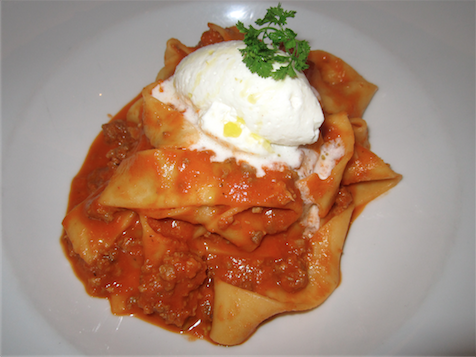
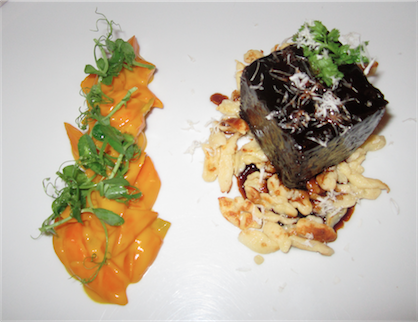
Feeling brave, we opted for two of the heavier main courses: Pappardelle Bolognese with Ricotta Mousse and Braised Short Rib with Spaetzle, Citrus Carrot Puree; both classic dishes but creatively reworked and adapted. The portions are generous and surprisingly filling (I was very disappointed when I couldn’t finish my bowl of pasta). The Bolognese sauce was rich and meaty and worked well with the thick pasta, although I found the ricotta mousse a little tart and would have preferred just grated parmesan on top. The braised beef was masterfully moulded into a cube structure and carefully placed with decoratively arranged accompaniments. It was wonderfully tender and aromatic but incredibly rich and probably too much for one person.

After lunch we were kindly escorted into the Picasso ‘Black and White’ exhibition for a look round the monochrome masterpieces, a sublime afternoon viewing after a heavenly lunch.

More information here: http://www.thewrightrestaurant.com/home/default.asp

Picasso and Modern British Art, Tate Britain

When the opportunity comes round to see a Picasso exhibition in London, Britons should relish it and rush to the show immediately. Picasso has directly influenced so much British art and is crucial to our version of Modernism. His vast output continues to amaze and inspire me every time I see his colourful and dynamic work.

I have seen Picasso exhibitions in all of my favourite cities: New York, Barcelona, Nice and Paris – he seems to appeal and be relevant to every generation and every culture. The current exhibition at London’s Tate Britain is titled ‘Picasso & Modern British Art’ and explores the work Picasso created and exhibited in Britain as well as the results of his staggering and continuing influence on leading British artists over the decades.

Various rooms exhibiting Picasso’s works from British collections are interspersed with rooms displaying the work from homegrown artists who have been directly and obviously influenced by him. Visitors flock to examine the original Picassos while the other work seems less interesting in comparison. Seven artists’ work is examined in detail: Duncan Grant, Percy Wyndham-Lewis, Ben Nicholson, Henry Moore, Francis Bacon, Graham Sutherland and David Hockney.

It is very interesting to observe Picasso’s work through the eyes of his contemporaries. Some artists like Duncan Grant offer little new, his paintings (for example ‘The Tub’) feel like an exaggeration of Picasso’s essential ideas. Wyndham Lewis was a leader of Britain’s avant-garde and though there is no evidence to suggest Lewis met Picasso his Vorticist aesthetic is an obvious continuation of Picasso’s Cubist invention.

I have always admired Ben Nicholson’s work, it is calming and quietly expressive. Along with Barbara Hepworth, he visited Paris and adopted some Cubist ideas. His linear paintings are more subtle than Picasso’s, their modesty and clarity is maybe closer to Braque. The sensuous female form Picasso captured so often in his paintings can be recognised in Henry Moore’s curvaceous and shapely figures. The room of Moore’s work is very different to the rest of the exhibition, and aside from Picasso’s pictures, his gorgeous sculptures were my favourite pieces in the show.

Francis Bacon’s room is particularly disturbing and unpleasant, and the comparison with Picasso’s work does this artist little favours. The canvases show horrific screaming mouths and faces, the proportions and figurative aspects display similarities with Picasso’s beach paintings. They are expressive pictures though I found they disrupted my train of thought.

I have to admit I am not a fan of the Graham Sutherland section. His aggressive, modernist paintings appealed very little to me. The palette is so dark that it negates Picasso’s vitality. In his canvases Sutherland brings together traditional English landscape and the innovations of continental modernism, but unfortunately I just found the results ugly.

The David Hockney room feels very topical and his interpretation of Picasso is intuitive and original. Hockney advances from Picasso’s Cubism to create multiple image photographic collages (and he has more recently applied the idea to video). The exhibition finishes with the epic ‘Three Dancers’ which Picasso considered to be one of his best works and was bought by the Tate.

This exhibition offers a real insight into Picasso and the genesis of Modern British art. He played a crucial role, and his work is so wonderful that most of the other work on display appears a little dull in comparison.

Exhibition continues until 15 July, more information and book here.