Yayoi Kusama, Victoria Miro Gallery

Victoria Miro is delighted to announce a new exhibition by Yayoi Kusama. Spanning the gallery’s three locations and waterside garden, the exhibition features new paintings, pumpkin sculptures, and mirror rooms, all made especially for this presentation. This is the artist’s most extensive exhibition at the gallery to date, and it is the first time mirror rooms have gone on view in London since Kusama’s major retrospective at Tate Modern in 2012.

Yayoi Kusama pumpkins

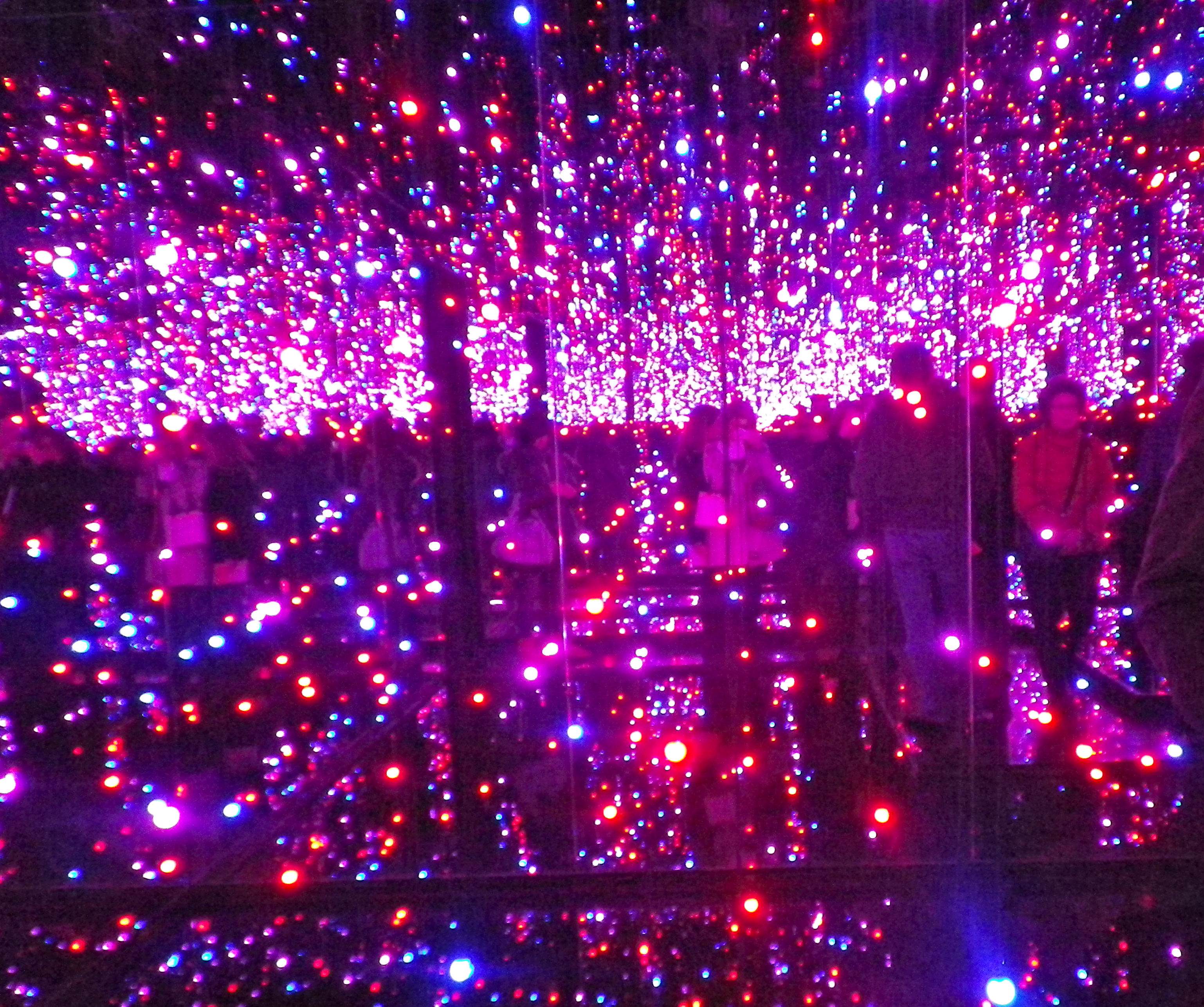
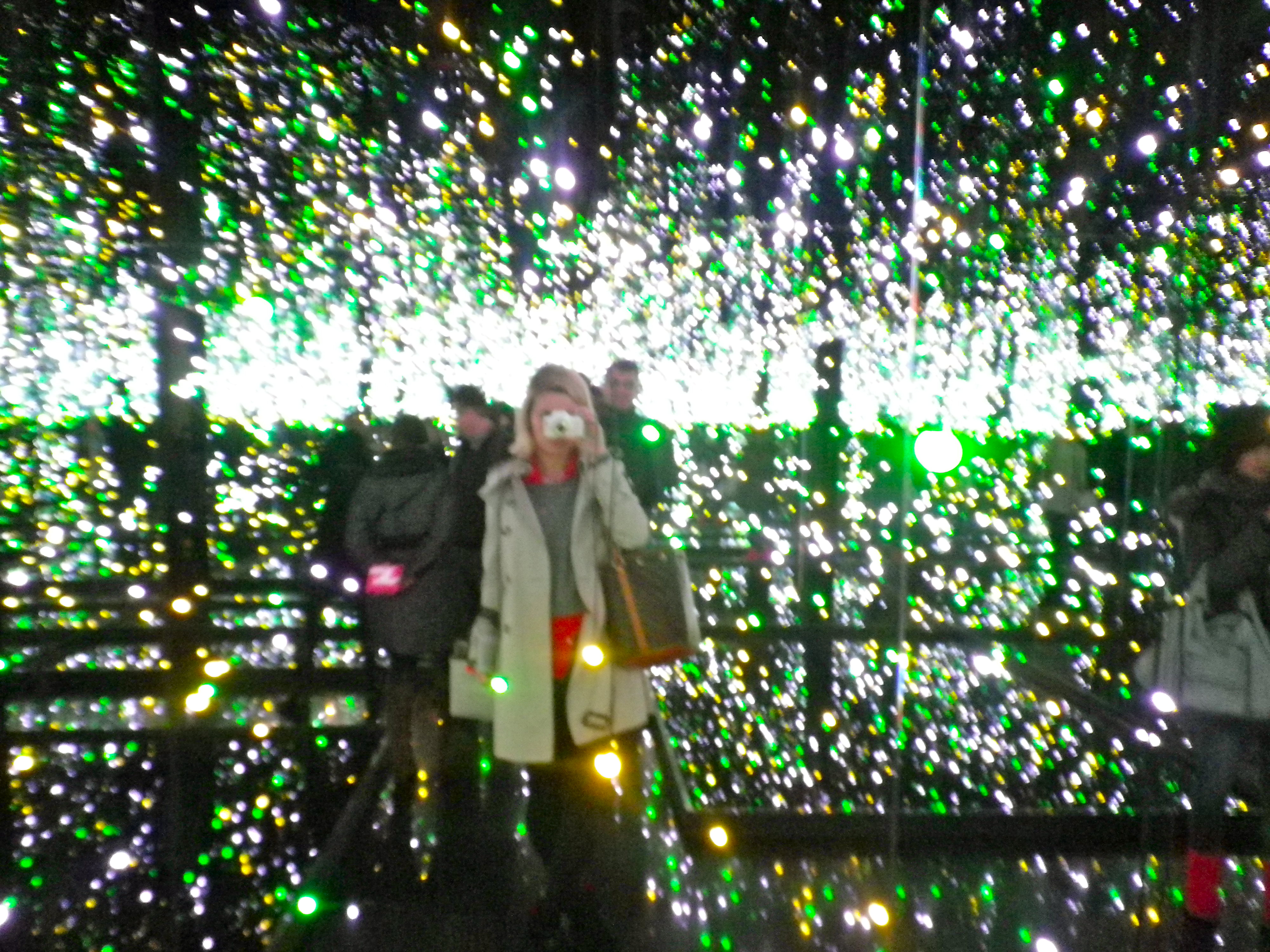
Yayoi Kusama’s lifelong exploration of the self’s relationship to the infinite cosmos has given rise to a highly influential career in which she has continuously innovated and re-invented her style. For the exhibition at the Wharf Road galleries, she has created three mirror rooms:Pumpkin’s Infinity Mirrored Room, Chandelier of Grief and Where the Lights in My Heart Go, all of which place the viewer within a universe of varying proliferating reflections.

Yayoi Kusama

New paintings displayed alongside these immersive rooms continue an enduring preoccupation with multiplying polka dots and dense scalloped ‘infinity net’ patterns – Kusama’s obsessive repetition of these forms on canvas, which she has described as a form of active self-obliteration, responds to hallucinations first experienced in childhood. The pumpkin, another motif that she has returned to throughout her career, is also present in the form of new polished mirror sculptures.

Victoria Miro Mayfair will present new paintings from the important ongoing series My Eternal Soul, which Kusama first began in 2009. Each is a flatly painted monochrome field that abounds with imagery including eyes, faces in profile, and other more indeterminate forms, often in pulsating combinations of colour. Joyfully improvisatory, fluid and highly instinctual, they testify to the indefatigable, paradoxical drive to expression that has unified Kusama’s constantly evolving oeuvre over seven decades.

Yayoi Kusama

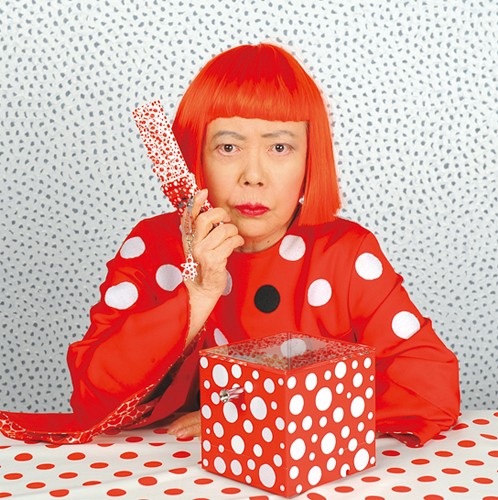
Yayoi Kusama has developed a practice which, though it shares affiliations with Surrealism, Minimalism, Pop art, the Zero and Nul movements, Eccentric Abstraction and Feminist art, resists any singular classification. Born in Matsumoto City, Japan in 1929, she studied painting in Kyoto before moving to New York in the late 1950s, and by the mid-1960s had become well known in the avant-garde world for her provocative happenings and exhibitions. Since this time, Kusama’s extraordinary artistic endeavours have spanned painting, drawing, collage, sculpture, performance, film, printmaking, installation, and environmental art as well as literature, fashion (most notably in her 2012 collaboration with Louis Vuitton), and product design.

Yayoi Kusama

Yayoi Kusama was recently named the world’s most popular artist by various news outlets, based on figures reported by The Art Newspaper for global museum attendance. Her exhibitions were consistently the most visited worldwide last year, with three museum tours simultaneously traveling through Asia, Central and South America and Scandinavia all drawing record-breaking attendances.

More information here: www.victoria-miro.com
Yayoi Kusama, Tate Modern

 A trip to Tate Modern begins with a trail of orange lampposts from Southwark tube station. At the Yayoi Kusama exhibition the colour continues with an explosion of bright psychedelic pattern and shape. It is about time that Japan’s best-known living artist received a respectable show in London.

Observing this amazing document of her life, it is clear that Yayoi is one hell of a character. Her vast output is vibrant and exciting, immensely dynamic and unlike any other. Her life long obsession with polka dots and the infinite is evident in her whole body of work. Following her comfortable upbringing in Matsumoto City in Japan where she began creating art, she moved away from a culture she found increasingly claustrophobic and towards the inviting big wide world.

Now aged 82, she is as prolific as ever but is confined to a wheelchair, proclaiming “I have done all the work myself, not assistants. That’s why I’m in a wheelchair”. Living in the mental health hospital she admitted herself to in 1970, her life is anything but conventional. Building herself a studio across the road she has commuted daily between locations ever since 1977.

At Tate Modern fourteen rooms display Yayoi’s sculptures, paintings, and videos from the 1960s to today. Her early paintings bear the direct influence of her native environment and upbringing in Japan. She studied the conventional style of Hihonga painting, and her images depict natural imagery. These pictures interestingly offer clues to her later more eccentric use of pattern and shape.

The phallic shape is a recurring motif throughout the exhibition, evident in her very first room installation from 1963, Aggregation: One Thousand Boats Show. A white painted, fabric phallus-encrusted rowing boat sits illuminating a dark room, the walls, ceiling and floor are covered with black and white posters of the same boat. It is very odd experience, the repetition and graphic qualities are reminiscent of the pop art movement.

The rooms sparkle gloriously, inspired by hallucinations, they are overwhelming, a never-ending sea of flickering lights, and bright specks of colour that are hypnotic in their beauty. Visitors are warned before entry that they may find the Infinity room unsettling and confusing. I thought the effects were magical and utterly entrancing.

Yayoi is not the only polka star in the art world, an obvious comparison is of course Damien Hirst and his obsessive spots which are currently on show in every branch of the Gagosian Galleries. Spots are the common theme running through her output, in her earliest works as a symbol of love and peace, in the most recent disorientating rooms, and in a dimly lit white room with fluorescent stickers everywhere, even in the clothing she wears.

I had great fun downstairs where a white room has been decorated by visitors with multi-coloured different sized spots, Yayoi inspired décor. The guard on the door handed me, what was apparently the last sheet of stickers and I went round finding suitable places for my contribution to the artwork. The effects are eerily similar to Yayoi’s mad creations upstairs.

A polka dot extravaganza awaits you…

Continues at Tate Modern until 5 June, more information and book here.