Vocal Orchestra, Udderbelly Southbank

The Vocal Orchestra is a dynamic group of young performers, using extreme vocal technique and beat-boxing to present a spectacular soundtrack. They are currently performing at the Udderbelly on the Southbank, sharing their energy and enthusiasm with the amazed audiences.

The hour long show is a triumph. The group are pitch perfect and secure and confident in all the complex harmonies and percussive cross rhythms. The show comprises renditions of well known tunes, from different genres and different ages (ranging from 18th century string quartets to up to date hip hop numbers), even including a jaw-dropping war soundtrack. All is arranged and created by the talented and internationally renowned Shlomo.

Seven vocalists (Claudia Georgette, Billy Boothroyd, Robin Bailey, Harriet Syndercombe Court, Johannah Jolson, Grace Savage and Ross Green) provide different elements and demonstrate different skills. No-one can deny each and every singer is hugely talented and musical, but it is their charm and confidence that really makes the show work. Grace Savage is particularly impressive as the booming bassline, and Claudia Georgette has a stunningly soothing soprano voice singing the melody for some of the jazzier numbers.

Surely these seven singers are the hippest crew in London… not only can they beatbox and perform any song without a backing track but they look super cool while doing it. I want to be in their gang.

Continues until 27th May, book here.

Yayoi Kusama, Tate Modern

 A trip to Tate Modern begins with a trail of orange lampposts from Southwark tube station. At the Yayoi Kusama exhibition the colour continues with an explosion of bright psychedelic pattern and shape. It is about time that Japan’s best-known living artist received a respectable show in London.

Observing this amazing document of her life, it is clear that Yayoi is one hell of a character. Her vast output is vibrant and exciting, immensely dynamic and unlike any other. Her life long obsession with polka dots and the infinite is evident in her whole body of work. Following her comfortable upbringing in Matsumoto City in Japan where she began creating art, she moved away from a culture she found increasingly claustrophobic and towards the inviting big wide world.

Now aged 82, she is as prolific as ever but is confined to a wheelchair, proclaiming “I have done all the work myself, not assistants. That’s why I’m in a wheelchair”. Living in the mental health hospital she admitted herself to in 1970, her life is anything but conventional. Building herself a studio across the road she has commuted daily between locations ever since 1977.

At Tate Modern fourteen rooms display Yayoi’s sculptures, paintings, and videos from the 1960s to today. Her early paintings bear the direct influence of her native environment and upbringing in Japan. She studied the conventional style of Hihonga painting, and her images depict natural imagery. These pictures interestingly offer clues to her later more eccentric use of pattern and shape.

The phallic shape is a recurring motif throughout the exhibition, evident in her very first room installation from 1963, Aggregation: One Thousand Boats Show. A white painted, fabric phallus-encrusted rowing boat sits illuminating a dark room, the walls, ceiling and floor are covered with black and white posters of the same boat. It is very odd experience, the repetition and graphic qualities are reminiscent of the pop art movement.

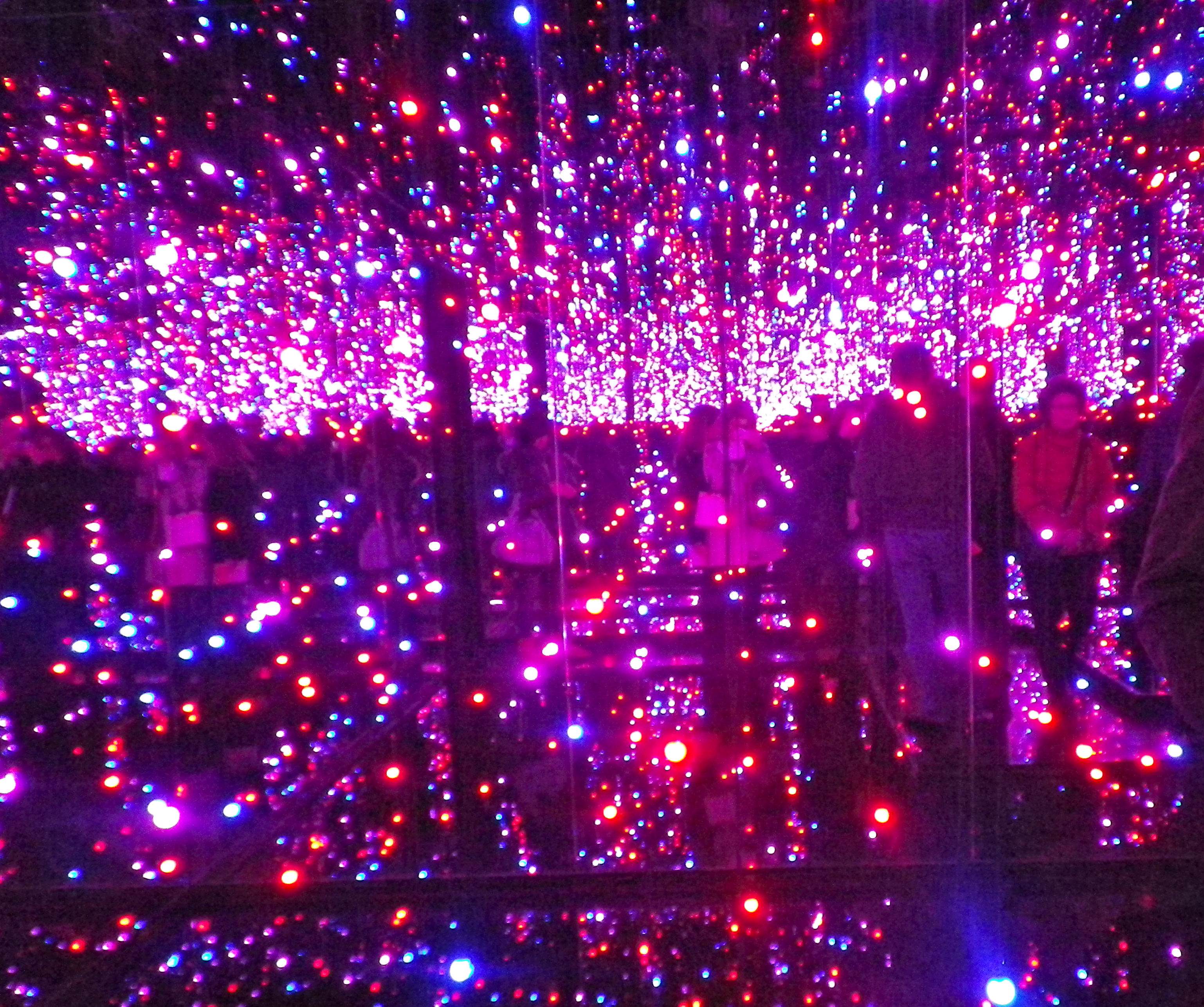
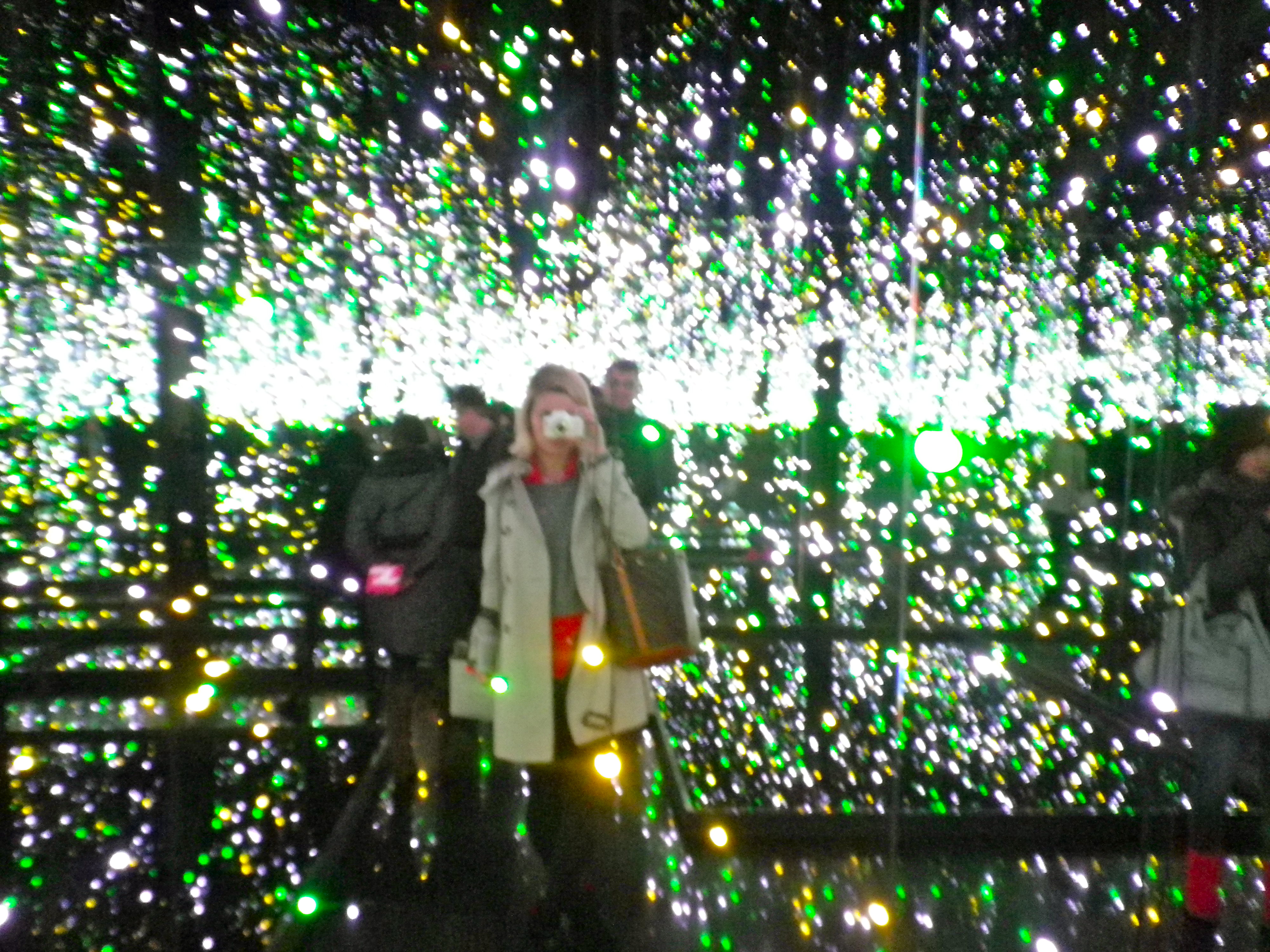
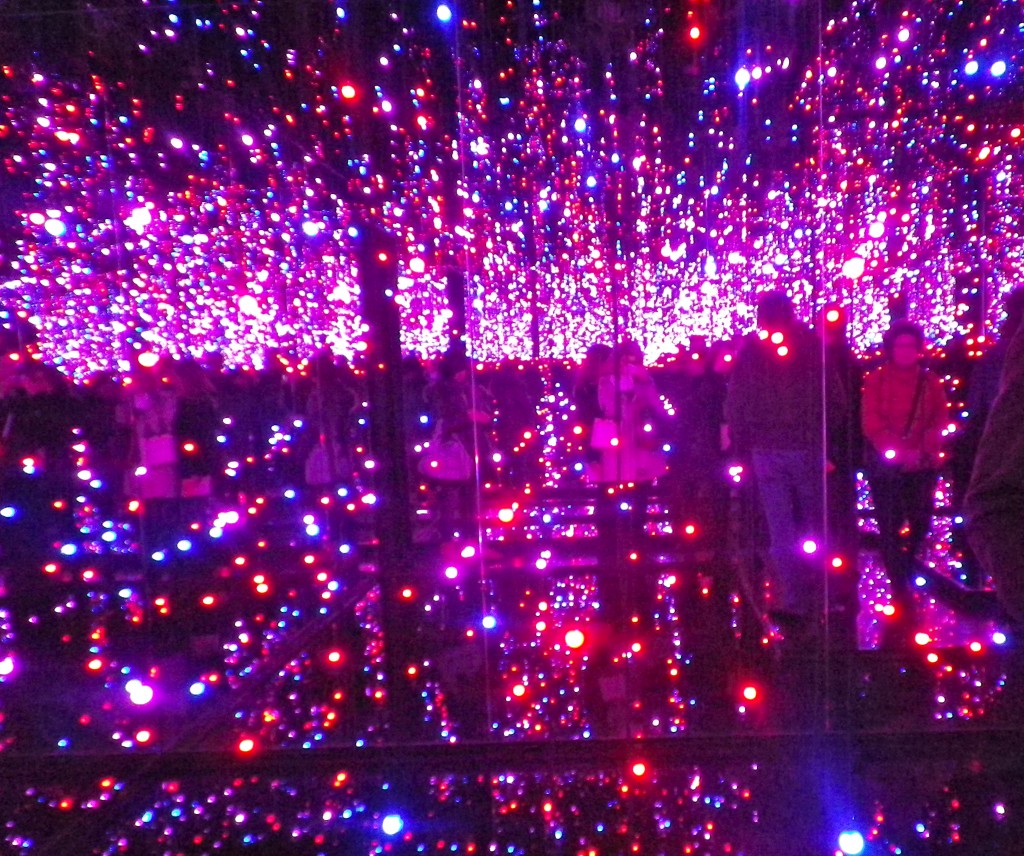
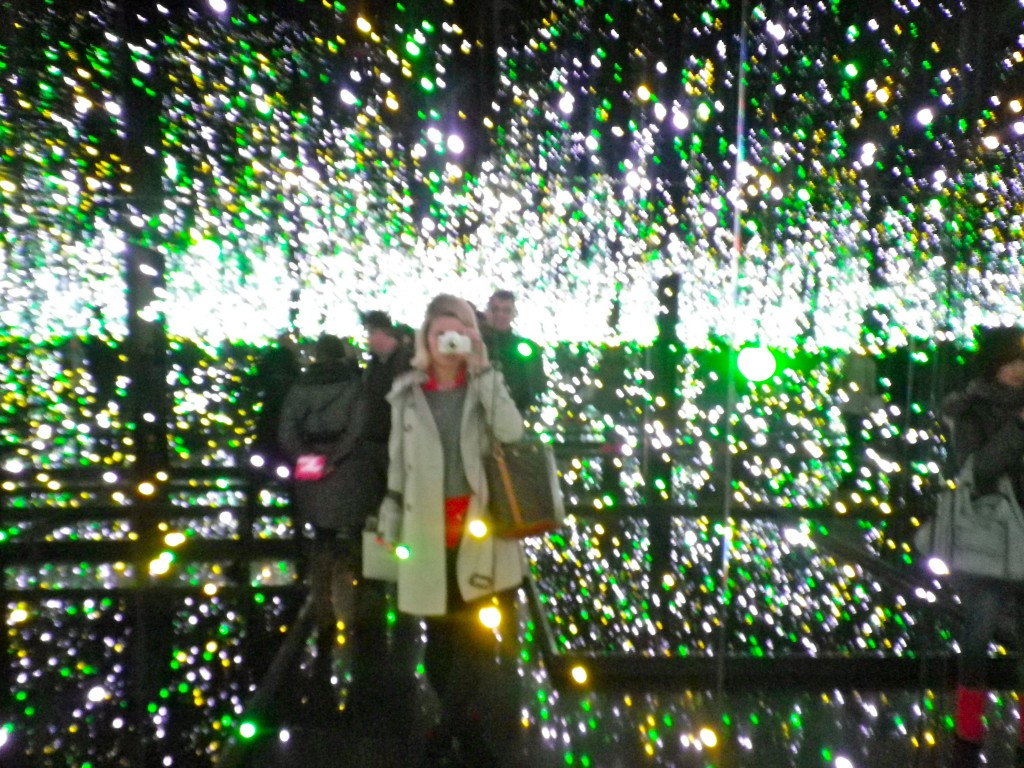
The rooms sparkle gloriously, inspired by hallucinations, they are overwhelming, a never-ending sea of flickering lights, and bright specks of colour that are hypnotic in their beauty. Visitors are warned before entry that they may find the Infinity room unsettling and confusing. I thought the effects were magical and utterly entrancing.

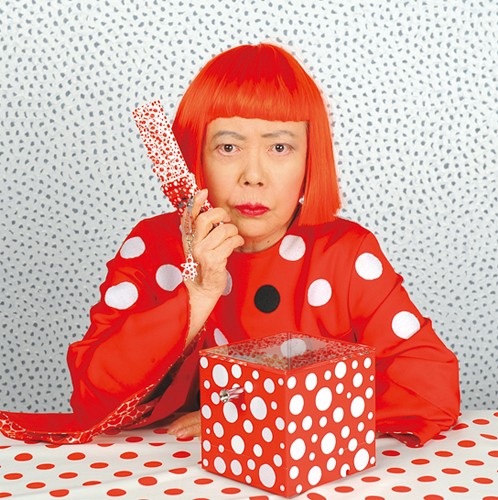
Yayoi is not the only polka star in the art world, an obvious comparison is of course Damien Hirst and his obsessive spots which are currently on show in every branch of the Gagosian Galleries. Spots are the common theme running through her output, in her earliest works as a symbol of love and peace, in the most recent disorientating rooms, and in a dimly lit white room with fluorescent stickers everywhere, even in the clothing she wears.

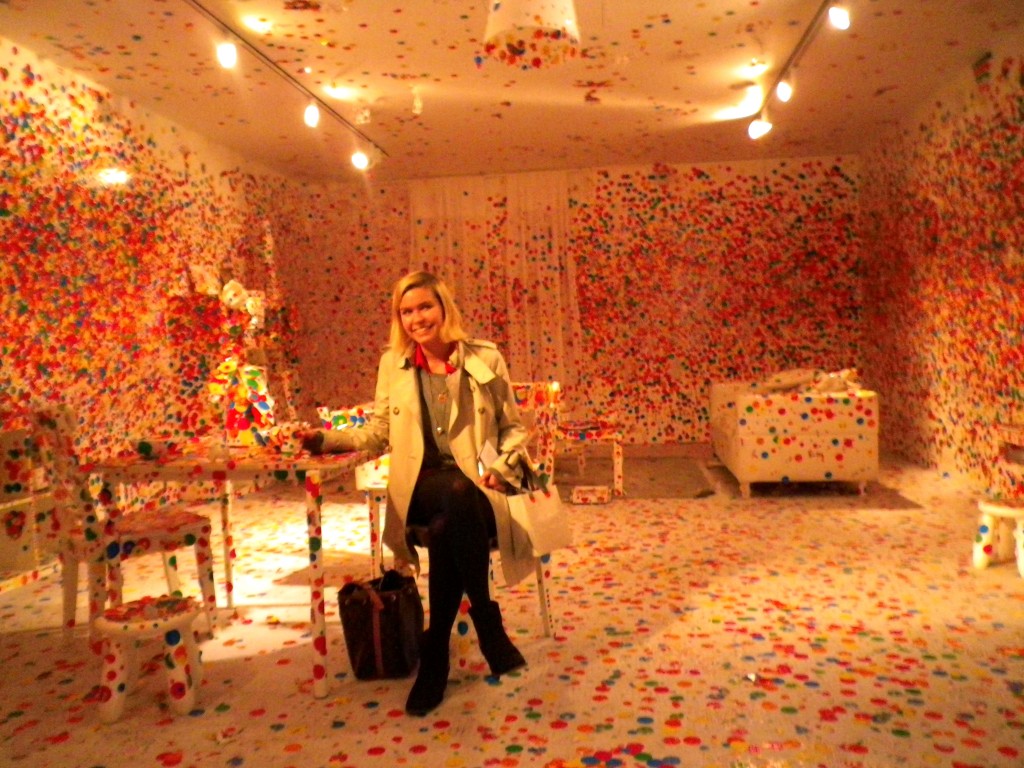
I had great fun downstairs where a white room has been decorated by visitors with multi-coloured different sized spots, Yayoi inspired décor. The guard on the door handed me, what was apparently the last sheet of stickers and I went round finding suitable places for my contribution to the artwork. The effects are eerily similar to Yayoi’s mad creations upstairs.

A polka dot extravaganza awaits you…

Continues at Tate Modern until 5 June, more information and book here.

Pekka Kuusisto in Concentric Paths, Queen Elizabeth Hall

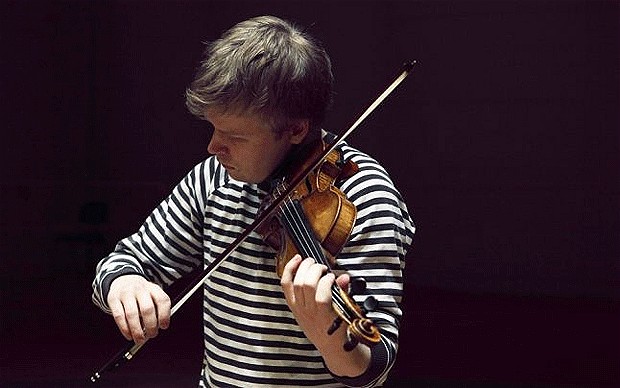
If there is one area I wish I could write about more it is live music, classical and popular. Considering that singing in classical concerts across the London stages occupied so much of my childhood, it is surprising that I don’t review more. On a rare night out together last week my sister, my mum and I went to the Queen Elizabeth Hall on the South Bank to see the adorable Finnish virtuosic violinist, Pekka Kuusisto.

Pekka visits London regularly to play with various orchestras, musicians and conductors; he is highly regarded by all. Before the concert we caught the final ten minutes of his pre-performance interview. He spoke of inspiration and the qualities that are most important for a professional musician. Joking and laughing, he was very down to earth and charming, instantly likeable.

For this concert, named Concentric Paths, he was joined by conductor and pianist Thomas Ades and the Britten Sinfonia. The first half of the programme focused on Couperin and interpretations of this great French composer’s work. I was particularly impressed with the orchestra, a sensational ensemble who play with musicality and expertise. I sat, amazed by the sound, and decided their playing could be compared to the perfect meringue – light, sweet and carefully balanced. Ades led the orchestra with a firm heart, poised and gracious.

Pekka, only arriving on stage for the second half, played some ridiculously complex music. Wearing a strangely informal (and unflattering) outfit, he smiled genuinely as he raised his instrument to his chin. Stravinsky’s ‘Air du Rossignol and Marche Chinoise’ was Pekka’s opening piece, he played it with boisterous energy while still conveying the delicate subtleties in the score. The final piece, Concerto for Violin (Concentric Paths) was written by Ades, an impossibly difficult showpiece which Pekka approached with his usual positive character and fresh creativity. He seemed to enjoy playing the staggeringly hard sequences, his fingers jumping expertly to and fro.

The evening concluded with a delicious encore, Sibelius’s Humoresque Number 4, a jolly little piece to complete a spectacular evening of musical talent.