Carsten Höller, Hayward Gallery

carsten slides

As a child I always imagined having a slide from my bedroom window down to the garden…it would have been the ultimate escape route from homework or bedtime. When I first saw the curly, shiny silver slides protruding from the Hayward Gallery I remembered my childhood dream happily. This fun installation is part of the Carsten Höller exhibition currently showing at Southbank’s favourite art space.

This is the Belgian artists largest survey show in the UK to date, showcasing a range of his weird and wacky inventions. Visitors are encouraged to engage with the exhibits, in fact Höller seems to consider the viewer and their actions as part of the artwork itself. The entrance is mysterious and immediately all-consuming as you enter into a pitch black tunnel – with disconcerting turns, all you can feel is the cold steel against your desperately searching hands. I found it quite unpleasant and was pleased to emerge into the light at the other end.

The exhibition is titled ‘Decision’, a theme which continues through all the works. You must decide when and how to participate. Some works are successful others less so, as is true in most interactive exhibitions. The frequent tedious waiting in line did rather dampen the excitement in some cases. There is an opportunity to fly over the traffic in ‘Two Flying Machines’, see the world upside down with ‘Upside Down Goggles’ or experience a sixth sense in ‘The Pinocchio Effect’.

The beauty of randomness is also explored. Red and white pills drop from the ceiling in three second intervals in ‘Pill Clock’. The pills land in a pile, which guests can pick up or ignore, by the end of the exhibition there will be 1.2 million pills deposited onto the floor. In ‘Two Roaming Beds’ Höller investigates the madness of dreams. The two beds creep around the gallery, empty during the day but occupied by members of the public at night.

It is the futuristic escape route that provided the most excitement for me though. The Isomeric Slides were created as ‘a sculpture you can travel inside’. This piece of art is both aesthetic and functional as a thrilling gallery exit, swooshing you quickly back to reality after the funfair of Carsten Höller surprises.

Book ahead and be prepared to queue for the popular participation pieces.

Continues until 6 September 2015, book here.
Martin Creed, ‘What’s the point of it?’, Hayward Gallery

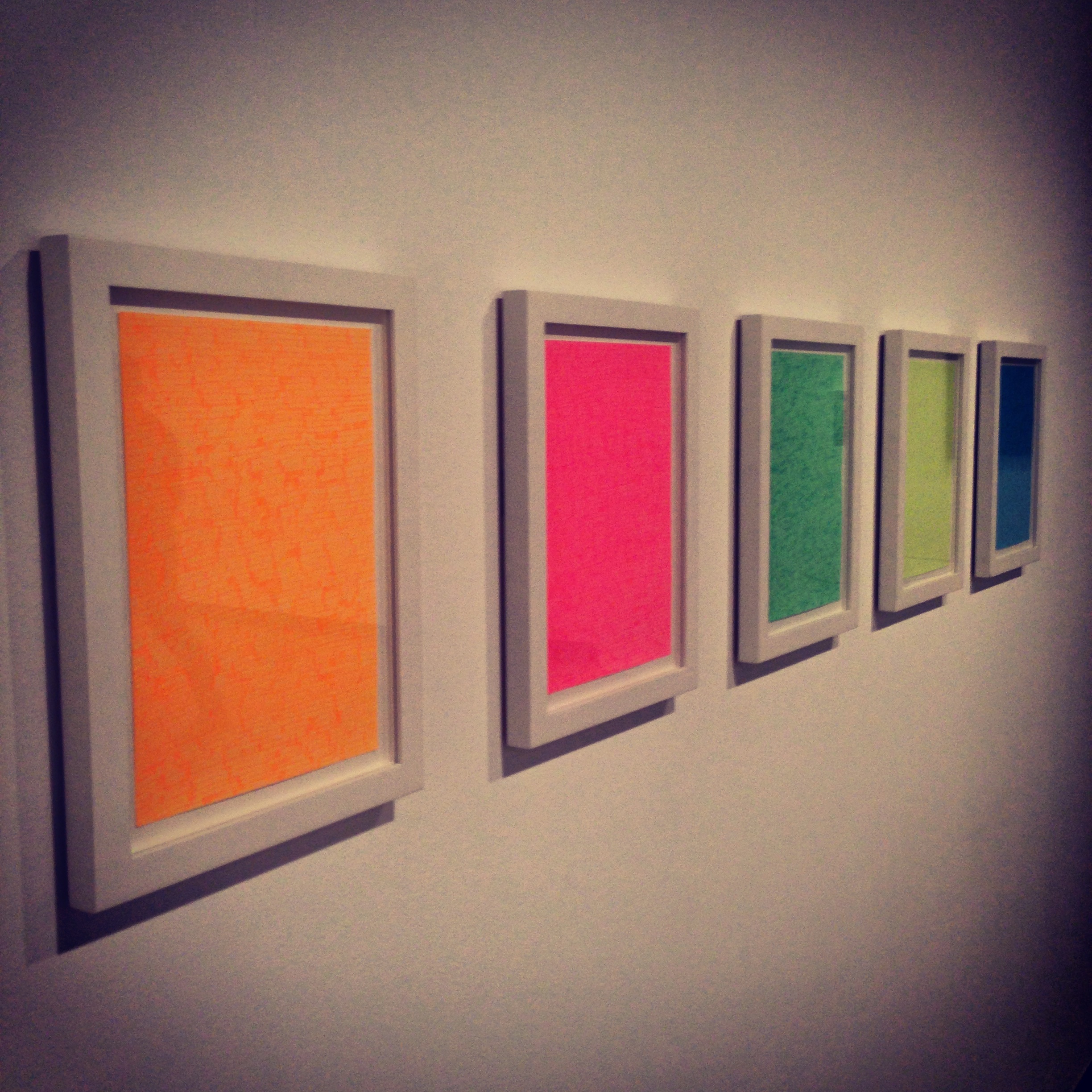
Martin Creed is a British artist and musician. In 2001 he won the Turner Prize for the seemingly simplistic Work No. 227: The lights going on and off, an empty room in which the lights did indeed go on and off, at five second intervals. This eccentric artist lives and works in London and continues to push boundaries in his work.

Playful and peculiar, this first major survey of Creed’s work is currently on show at the Hayward Gallery and aims to encourage thought and discussion, exemplified by the title of exhibition, ‘What’s the Point of it?’ It is a random sequence of pieces, often art is disguised in a strange object, disturbing video or abstract action. There is a range of works and installations that will titillate and alarm all of your senses.

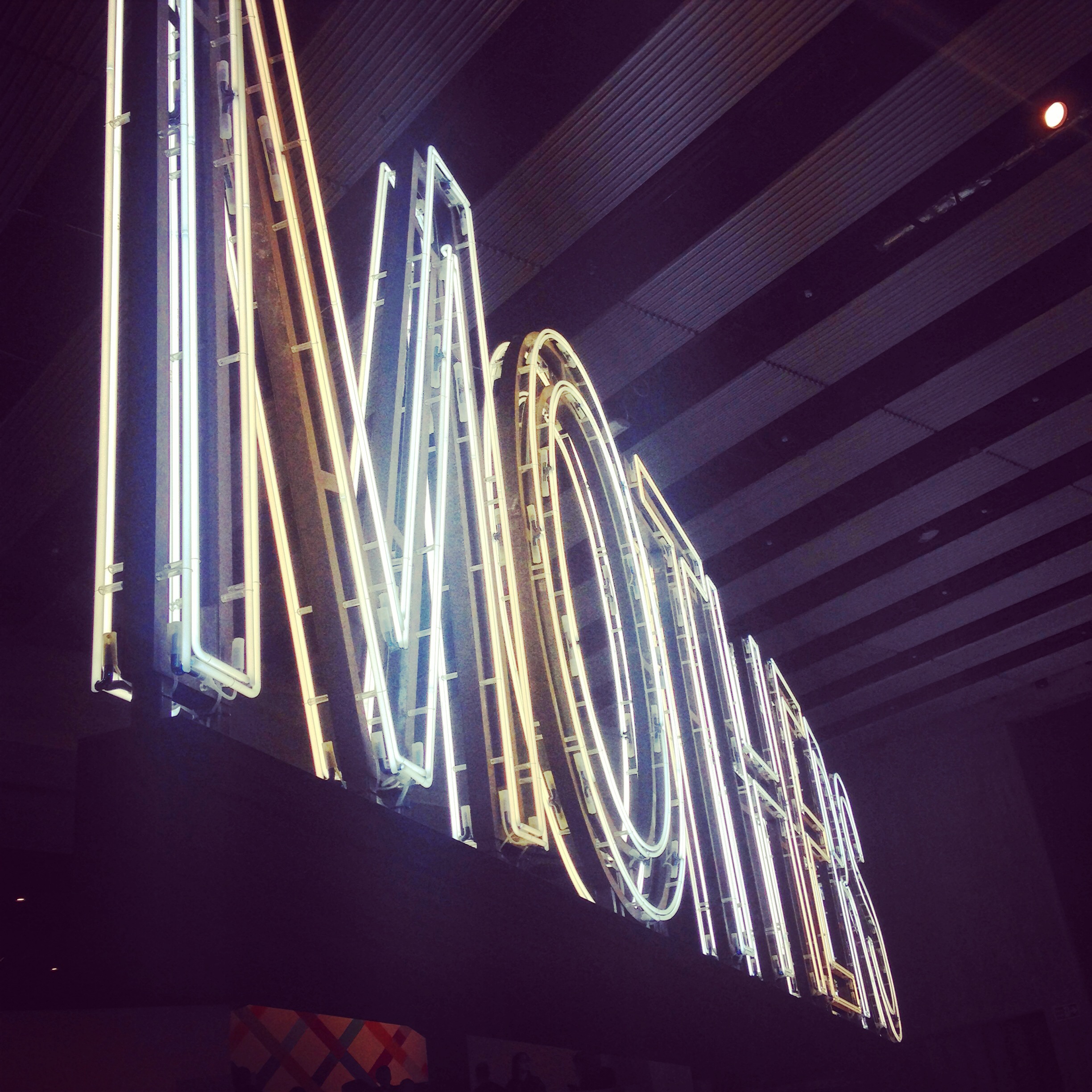
When you enter the gallery an impressive spinning neon banner reads ‘MOTHERS’, meanwhile metronomes tick constantly around the room. This neon sign seemed particularly appropriate when I visited (the day before Mothering Sunday), it is inspiring and yet intrusive. A man sits at a piano descending and then ascending playing each semi-tone, each note is given an equal amount of time. It is odd and leaves the visitor wondering ‘why?’

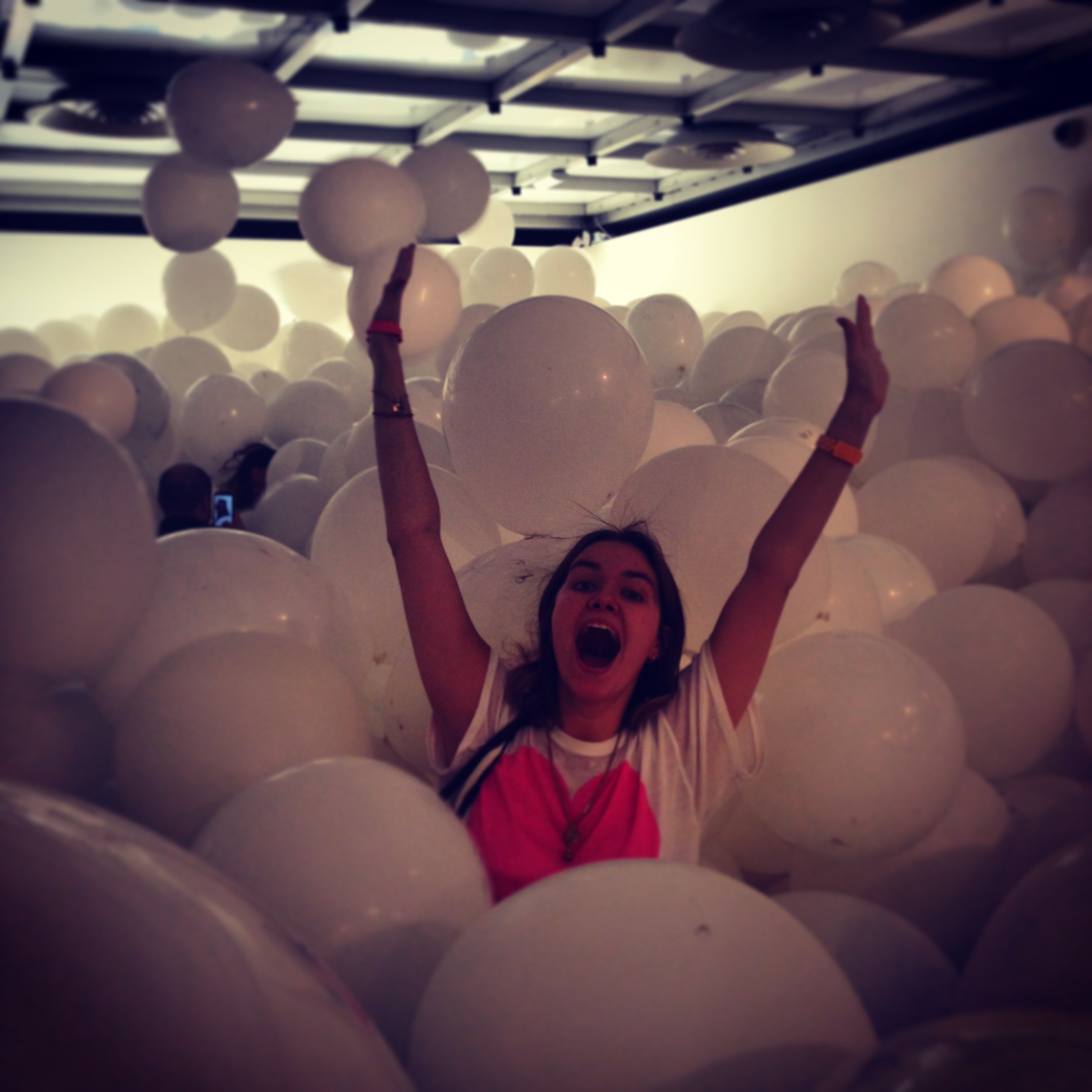
I have seen Creed’s revolting vomit video before, and this time round found it just as unsettling, in fact I couldn’t watch for more than a few seconds. Is this what the artist intends? Again we are left questioning, almost frustrated by the lack of understanding or explanation. Upstairs the pieces have a more pleasing aesthetic quality. Colour and shape is more evident and there are several entertaining pieces which are enjoyable to ponder and watch. Visitors are encouraged to enter a room full of white balloons, squeeze in amongst them and feel the static energy.

Despite an obvious lack of traditional artistic craft, this exhibition offers wit and wisdom and could not bore even the most complacent visitor. It is a colourful and varied display from one of London’s most thrilling artists.

Martin Creed continues until 5 May at the Hayward Gallery, more information and buy tickets here.

Light Show, Hayward Gallery

I’m delighted that Londoners are keen to see art exhibitions but it does mean getting tickets is a pain. The Hayward’s current exhibition, Light Show, is sold out almost every day, so tickets have to be booked in advance. It also means that when you do finally get inside you have to contend with hundreds of other visitors to see each work clearly.

Light Show explores the experiential and phenomenal aspects of light by bringing together sculptures and installations that use light to sculpt and shape space in different ways. The exhibition showcases artworks created from the 1960s to the present day, including immersive environments, free-standing light sculptures and projections. You see atmospheric installations and intangible sculptures, some that you can move around or even through. Visitors can experience light in all of its spatial and sensory forms. Individual artworks explore different aspects of light such as colour, duration, intensity and projection, as well as perceptual phenomena. They also use light to address architecture, science and film employing a variety of technologies.

Some pieces are rare not seen for decades and others have been created specially for the Hayward Gallery. It is amazing to experience and understand how light can stimulate our minds and alter our mood. I found some very beautiful and others quite disturbing, but all of them use light in innovative and creative ways that make you think.

Light Show features work by 22 artists including David Batchelor, Jim Campbell, Carlos Cruz-Diez, Bill Culbert, Olafur Eliasson, Fischli and Weiss, Dan Flavin, Ceal Floyer, Nancy Holt, Jenny Holzer, Ann Veronica Janssens, Brigitte Kowanz, Anthony McCall, François Morellet, Iván Navarro, Philippe Parreno, Katie Paterson, Conrad Shawcross, James Turrell, Leo Villareal, Doug Wheeler and Cerith Wyn Evans. Be warned that some installations in the exhibition contain artificial mist, flashing or strobe lighting, and others are sure to give you a headache if you watch for too long. I felt like I was entering another universe at times, the ethereal and glittering works certainly disorientate and surprise.

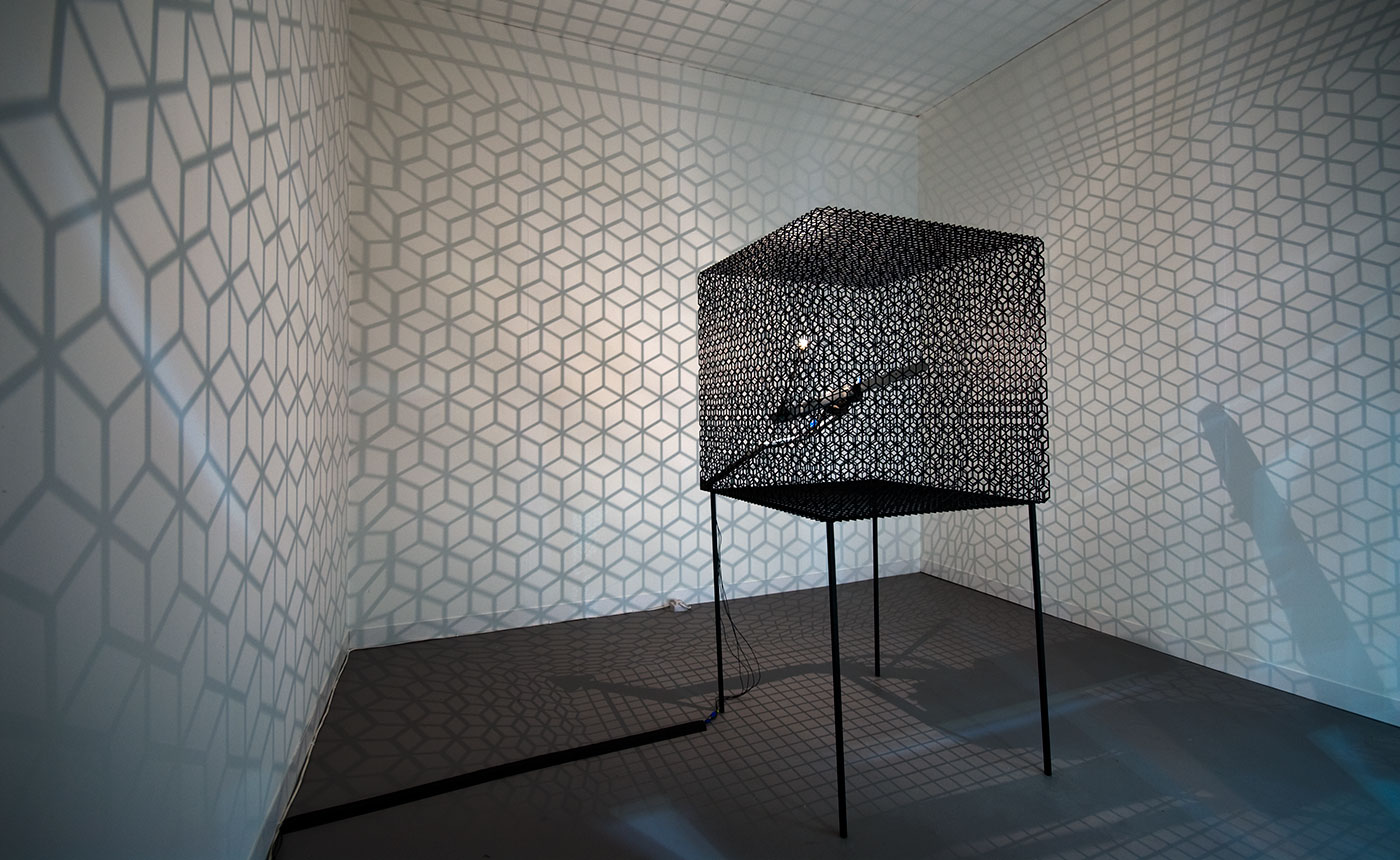
I was most stunned by Conrad Shawcross’ Slow Arc Inside a Cube IV made in 2009. This beautiful structural cage is very simple but with the gently moving light creates a complex game of ever-changing shadow and illumination, it is quite mesmerising. I also really enjoyed the special light filled rooms which feel completely immersive and are great fun to explore.

On the way out, the shop stocks examples of fabulous light objects and furniture. I fell in love with the romantic neon letters by Seletti. Buy your own individual letters for £35 each and make up any word (or work of art) you desire.

Continues until 28th April, book here.