Reading about Someone to Blame weeks before I saw it, I knew that it could be a play I would never forget. Although this remains true, the production itself isn’t the reason it will haunt me, it’s the subject matter.
Sam Hallam was 17 when he was arrested and charged with the murder of Essayas Kassahun. Essayas was killed by a gang in Hoxton when he went to the aid of his friend Louis. Tragic though this is, he was not the only one to lose his life that day. Sam was found guilty of murder, despite the fact that he, and several other witnesses, asserted that he was not even at the scene. The prosecution evidence was fundamentally flawed: it consisted of two eye witnesses, one who retracted his statement in court and the other that admitted she had just been “looking for someone to blame.” And yet the jury still sentenced him to life imprisonment.
That was 7 years ago. Since his arrest, Sam’s family and friends have never doubted his innocence, mounting a campaign to appeal his guilty charge. On 16th and 17th May 2012, Sam will have his second appeal hearing, possibly his last chance for freedom. Writer, Tess Berry-Hart, used transcripts from the court case and interviews with family and friends to write Someone to Blame, a word for word account of the incident.
A story like Sam’s clearly lends itself to drama and Someone to Blame doesn’t lack in that department. The actor playing Paul May, the lawyer appealing the case, restlessly narrates the entire story from a stool in the corner of the stage. Although many of his insights into the case are useful, he often interrupts the flow of a scene with overcomplicated and condescending explanations, which seem to labour the point.
The fact that the script is completely verbatim is one of the great selling points of the production because we know we are getting an accurate account of events, or rather, accurate from one very specific viewpoint. But consequently, the script feels disjointed and episodic in parts. The best scenes were the ones in which characters were allowed a lengthy period of interaction, such as the court scenes, which felt more like a play and less like a law lecture.
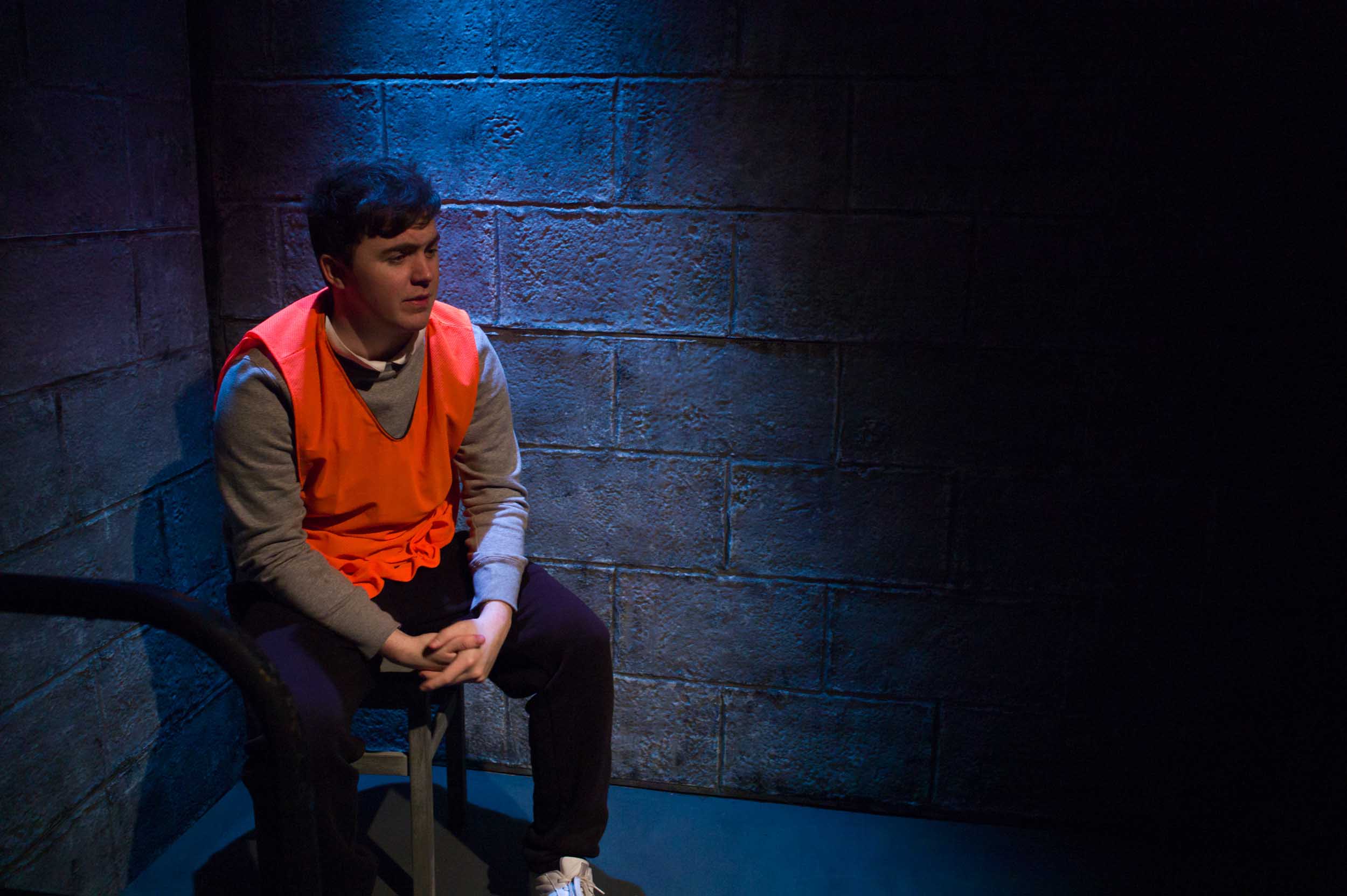
Robin Crouch’s Sam was very good; he evoked sympathy and admiration without appearing desperate and unexpectedly took a back seat to many of the other more sensational characters.
Unsurprisingly, the production couldn’t quite strike the balance between art and reality; it was clear throughout that I was watching a campaign advertisement. No more so than at the very end, when Sam’s friends warn the audience that injustice could just as easily happen to us, even people who “live in a million pound mansion in Knightsbridge”. In a style strikingly similar to Niemöller’s anti Nazi poem, May then warns us, almost threateningly, that if we don’t support Sam now, one day it could happen to us and then who could we ask for help?
There is no doubt that Someone to Blame is promoting an important cause and one that I am now invested in, as I’m sure many other audience members are. Although at points lacking in depth and flow, it was a shocking example of incredible injustice with truly tragic consequences. That’s what we’re supposed to believe, anyway.
Someone to Blame continues until 31 March, more information here.
Written by Thoroughly Modern Milly, Jenny Greenwood.